The summer when AI took over


The summer of 2026 was unusually hot in the UK. Properly hot.
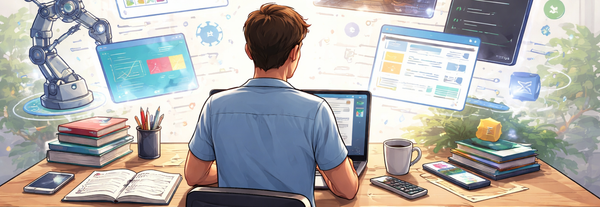
As a teacher, I had the luxury of looking ahead to several weeks without lessons, marking or the usual school routine, and I had already decided what my main summer project was going to be.
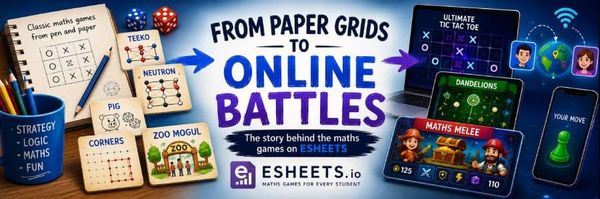
I run a GCSE maths website called esheets.io.
Alongside the worksheets themselves, I had been building a teacher portal that allowed teachers and tutors to set work and see the scores their students achieved.
It worked, but there was an obvious limitation.
I could see that a student had scored, say, 6 out of 8. What I couldn't see was what they had actually answered.
That mattered. A score tells you something, but the mistakes are often much more useful. Did the student misunderstand the concept? Make an arithmetic slip? Leave a question blank? Repeat the same mistake several times?
So my big summer objective was clear: redesign the system so that ESHEETS captured individual student responses and displayed them properly to the teacher.
I thought it might take a week.
Possibly two.
Then GPT-5.6 Sol arrived.
My two-week project lasted one day
The timing was almost ridiculous.
GPT-5.6 Sol became available just as the summer holidays began, so naturally I pointed it at the problem.
By the end of the first day of the holidays, the project I had mentally allocated a substantial chunk of my summer to was essentially working.
Student responses were being captured. They could be stored, retrieved and displayed in the teacher portal. The architecture had been worked through, the awkward bits solved and the feature that I had expected to spend days gradually constructing had suddenly become real.
I remember being slightly stunned by it.
There has been a lot of discussion about AI productivity over the last few years, usually framed in terms of saving time.
AI can write this faster.
AI can summarise that faster.
AI can save you twenty minutes here and an hour there.
But this felt different.
The interesting part wasn't simply that AI had saved me a week or two.
It was that I suddenly had the week or two back.
That changes what you build.
If a project that previously consumed a fortnight can now be completed in a day, you don't necessarily spend the remaining thirteen days sitting in the garden.
You move the goalposts.
And that is largely what happened to my summer.
Things I wouldn't previously have attempted
With the portal work unexpectedly out of the way, I started focusing much more heavily on expanding ESHEETS itself.
We built a lot of new maths worksheets.
Some were straightforward enough. Others became surprisingly ambitious: graphical activities, vectors, constructions, loci, bearings, simultaneous equations and interactive geometry.
The important change was not simply that AI could write JavaScript faster than I could.
I was beginning to attempt resources that I might previously have rejected at the idea stage.
There is a huge difference between thinking:
"That would be a nice worksheet, but it would probably take me three days to build."
and:
"That sounds interesting. Let's see if the AI can build it."
The economics of experimentation change.
A failed idea becomes much cheaper.
A complicated idea becomes much less intimidating.
And occasionally something emerges that is significantly better than I would have had the patience to build myself.
We finally found something useful for the Beelink
There was another small victory over the summer.
I finally found a purpose for my Beelink.
For the non-technical reader, a Beelink is essentially a very small PC. Mine is a little box that costs far less than a normal desktop computer, uses relatively little power and can sit quietly somewhere running software without needing a monitor permanently attached to it.
I had bought one because I was convinced it would eventually be useful.
For quite a while, it wasn't.
It sat there being an impressively compact solution to no particular problem.
That has now changed.
The Beelink has become part of what is gradually turning into an AI worksheet-production system.
And this is probably the part of the summer that has most changed my view of where all this is heading.
From AI assistant to AI production line
My early use of generative AI was fairly conventional.
I asked ChatGPT questions.
Then I started asking it to write code.
Then I used it to debug code.
Then different AI models started taking on different jobs.
The latest version of the workflow goes considerably further.
If I want a new ESHEETS worksheet created, my input can now be remarkably small.
I can provide a link showing the mathematical content I want covered, give the system a couple of worksheets so that it understands the style and structure, and add a few instructions explaining what I want.
From there, GPT-6 Astra can create the worksheet.
Not merely suggest some questions.
It can construct the actual resource: HTML, CSS, JavaScript, marking logic, randomisation and the interactive elements needed to make it behave like the rest of the site.
The resulting worksheet can then be passed to Claude for a second opinion.
Claude isn't there to build the same thing again. Its role is closer to that of a reviewer: looking for problems, inconsistencies, bugs or things the first model might have missed.
The Beelink sits underneath this as part of the machinery that allows the process to run.
So we now have one AI creating work and another AI checking it.
That still sounds slightly absurd when I write it down.
The teacher is still required
This is the point where it is very easy to get carried away.
I don't press a button, go to bed and wake up to discover that an artificial intelligence has become an experienced maths teacher.
It hasn't.
The technical work is becoming increasingly automated.
The professional judgement isn't.
When I review a new worksheet, I am still asking questions that aren't simply programming questions.
Does the first question give students an accessible way into the topic?
Does the difficulty increase at a sensible rate?
Are there enough opportunities to practise the core skill before something more complicated appears?
Could a mathematically correct question nevertheless confuse a 14-year-old?
Is there an ambiguity that a computer hasn't noticed?
Does an interaction that looks fine on a laptop become irritating on an iPad?
Has the AI produced eight perfectly valid questions that are all essentially the same question?
These things matter.
And this is where my role has begun to change in an interesting way.
I am doing less of the mechanical construction myself.
Increasingly, I am specifying, reviewing, testing, rejecting, modifying and approving.
In other words, I am spending more of my time doing the part that actually requires the experience of being a teacher.
I don't regard that as removing the human from the process.
If anything, it is concentrating the human contribution into the part where it is most useful.
And then there is the boring stuff
Not all useful AI work involves complicated maths interactives.
Some of the most valuable automation is much less glamorous.
Marketing is a good example.
I am not naturally enthusiastic about sending outreach emails.
Unfortunately, building a useful website and hoping that everybody magically discovers it is not an especially reliable business strategy.
So ChatGPT scheduled tasks have increasingly become involved in managing that process too.
Potential maths tuition partners are worked through systematically and customised outreach emails are prepared and sent on a regular basis.
The important word there is customised.
This isn't simply blasting the same generic message to hundreds of email addresses.
The aim is to make the outreach relevant to the person or organisation being contacted while also removing much of the repetitive administrative work from me.
And that matters because this is exactly the kind of task I am inclined to postpone.
Indefinitely.
There is an odd possibility that, in commercial terms, having AI reliably perform boring jobs may ultimately matter more than some of the spectacular things we like demonstrating with it.
Something changed this summer
Looking back, I think the biggest change over the summer of 2026 was not any individual feature or worksheet.
It was the relationship I now have with the technology.
A year or two ago, AI was something I talked to.
Then it became something I worked alongside.
Increasingly, I am now building systems in which different AIs do pieces of work for me and for each other.
One writes.
Another reviews.
Scheduled tasks handle repetitive jobs.
A little computer that previously had no obvious purpose quietly keeps some of the machinery running.
And I sit above the process deciding what ought to exist, whether the result is any good and what should happen next.
That seems to me a much more significant development than simply having a chatbot that gives better answers.
I started the summer expecting to spend perhaps two weeks improving the teacher portal.
Instead, that project was largely completed on the first day.
By the end of the summer, we had built a substantial collection of new resources, given the neglected Beelink a proper job, developed the beginnings of an AI-driven worksheet-production pipeline and started handing repetitive business tasks to scheduled AI agents.
All during a summer so hot that sitting indoors playing with computers was probably not the most rational lifestyle choice.
But it was memorable.
And I suspect that when I look back at my own experience of learning to use AI, the summer of 2026 will mark an important dividing line.
It was the summer when AI stopped merely helping me do the work.
It was taking over.